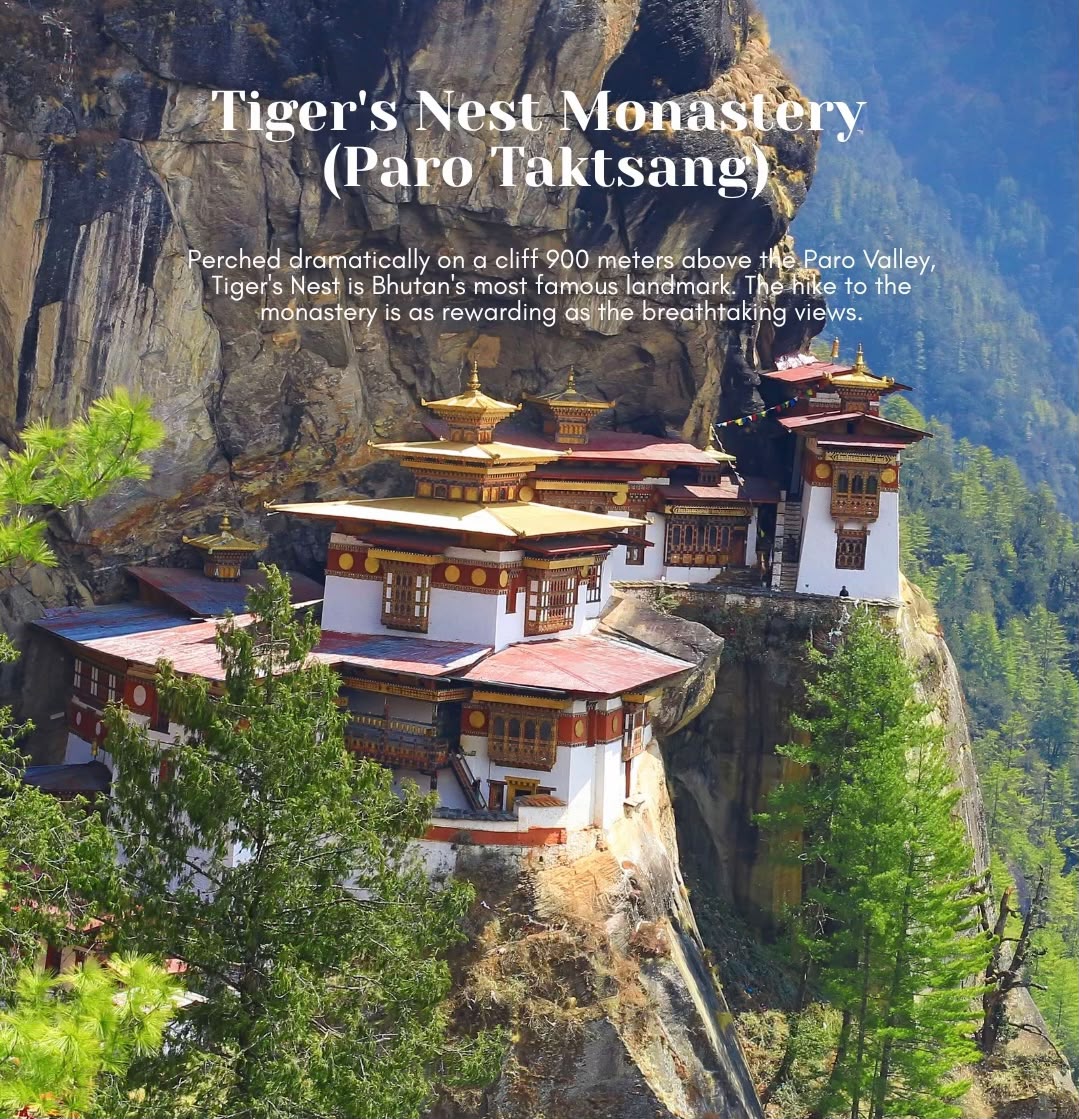
Rising 900 metres above the Paro Valley, Taktsang Monastery — better known as "Tiger's Nest" — is without doubt the most iconic and sacred site in Bhutan. Perched dramatically on a sheer cliff face, it has drawn pilgrims, monks, and travelers for centuries. For many visitors, hiking to Tiger's Nest is the single most memorable experience of their entire Bhutan trip.
The Legend Behind the Monastery
The story of Tiger's Nest begins in the 8th century with Guru Rinpoche — also known as Padmasambhava — the great Buddhist master credited with bringing Tantric Buddhism to Bhutan. According to legend, Guru Rinpoche flew to this clifftop on the back of a tigress and meditated in a cave here for three months. The monastery was later built around that sacred cave in 1692.
He who visits Tiger's Nest once clears the sins of the past seven lives. He who visits it seven times is guaranteed liberation.
— Ancient Bhutanese Buddhist sayingThe Hike: What to Expect
The trail to Tiger's Nest begins at the base of the valley, at an altitude of roughly 2,600 metres. The monastery sits at approximately 3,120 metres, meaning you'll gain about 520 metres of elevation over a distance of roughly 4.5 km one way. Most visitors complete the round trip in 4–6 hours, depending on fitness and how long you spend at the monastery.
Difficulty & Fitness Level
Tiger's Nest is classified as a moderate hike. While the trail is steep in places and the altitude means the air is thinner than you might be used to, it is accessible to most reasonably fit adults. Children as young as 6–7 years old regularly complete this hike with their families. Horses and mules are available for hire at the trailhead.
Best Time to Visit
Tiger's Nest can be hiked year-round, but the best conditions are from March to May and September to November. During these months the skies are typically clear, temperatures are comfortable, and the surrounding rhododendrons or golden autumn foliage make the trail particularly beautiful. Avoid the monsoon months of June–August if possible.