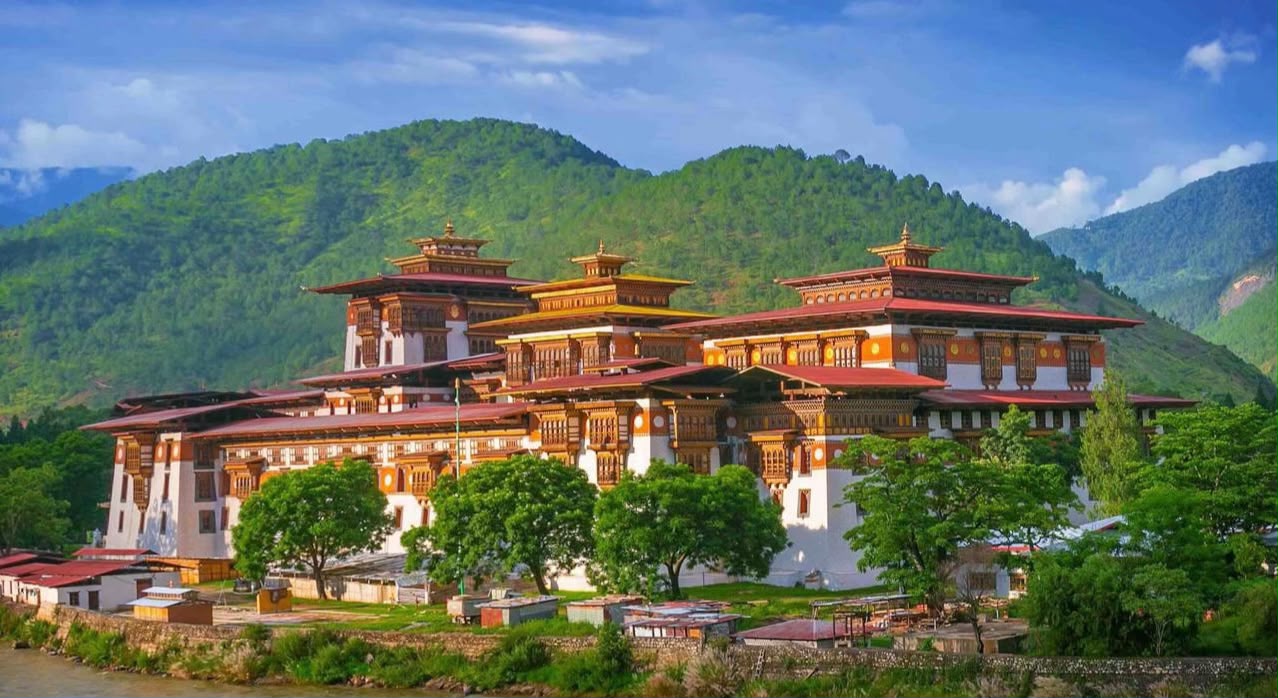
At the confluence of the Pho Chhu and Mo Chhu rivers stands Punakha Dzong — the most beautiful and historically significant fortress-monastery in Bhutan. Built in 1637 by Zhabdrung Ngawang Namgyal, it served as the capital and seat of government for over 300 years.
History and Significance
Punakha Dzong has witnessed some of Bhutan's most defining moments. It was here that the first King of Bhutan was crowned in 1907, unifying the country under a single monarch. The dzong remains the winter residence of Je Khenpo, Bhutan's Chief Abbot, and continues to be the venue for royal ceremonies.
Punakha Dzong is not just a building — it is the soul of Bhutan made physical.
— Bhutanese HistorianArchitecture
The dzong stretches 180 metres long and features a massive white-washed tower, intricate woodwork, and a stunning central courtyard filled with ancient jacaranda trees that bloom purple in spring. The structure survived multiple fires and floods, each time rebuilt with extraordinary craftsmanship.
Visiting Punakha Dzong
The dzong is open to visitors year-round, though spring (March–May) is particularly magical when jacaranda blossoms carpet the courtyard in purple. Modest dress is required — a kira for women, gho for men, or respectful attire for foreigners. Photography is permitted in the courtyards.